Stuart Price Rebuilt the Sound of Madonna’s Confessions Sequel
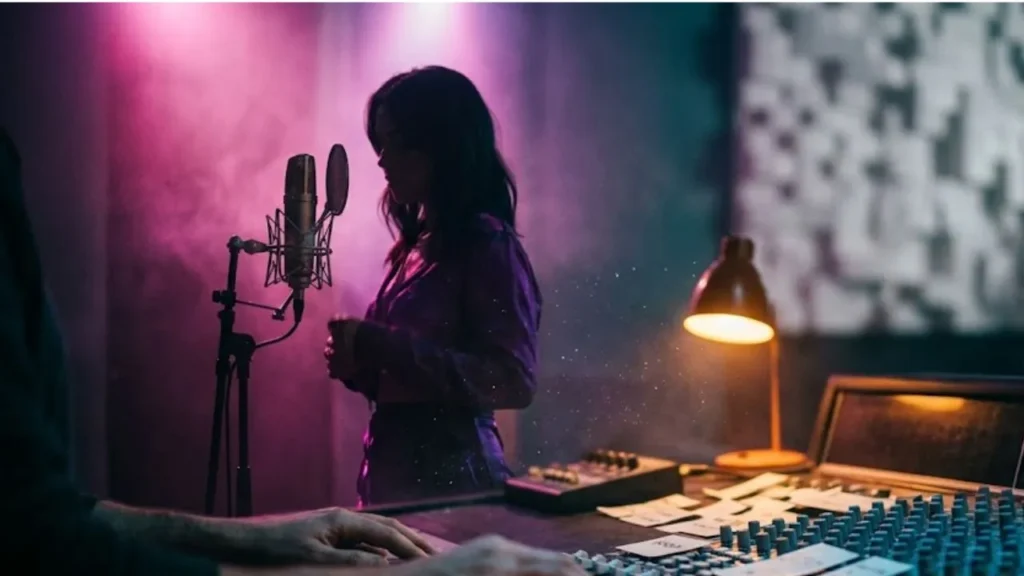
Inside the Maida Vale studio where the continuous mix was sequenced over eighteen months.
YOU NEED TO KNOW
- Confessions II isn’t a remake of the 2005 original, producer Stuart Price built its sound around slow burns and payoffs instead of chasing another “Hung Up.”
- The album moves through genres track by track, touching Detroit house, UK garage, French Touch and even trip-hop without settling on one sound.
- A songwriting credit for the late Lou Reed appears on the album, tying Madonna’s downtown New York roots directly into the record’s DNA.
- The most emotionally loaded production choice may be “The Test,” built with Arca and featuring Madonna’s daughter Lourdes Leon.
Twenty-one years is a long time to sit on a follow-up. When Madonna reunited with producer Stuart Price for Confessions II, released July 3, 2026, the pressure wasn’t just to make another good dance record.
It was to avoid repeating a moment that already worked perfectly the first time.
Most of the coverage around this album has focused on the surface details, the tracklist reveals, the Sabrina Carpenter collaboration, the vinyl variants tied to Grindr and Bilt Rewards, the Coachella cameo that leaked “Bring Your Love” months early.
All of that is real and all of it mattered to the rollout. But it skips past the more interesting question: what did Price actually build underneath all of it, and why does it sound the way it does?
Confessions on a Dance Floor arrived in 2005 as a landmark of dance pop, built on a disciplined continuous-mix architecture that felt both classic and modern for its era, arriving years before EDM fully took over pop radio.
Price had the advantage of timing back then. He doesn’t have it now. Confessions II runs through multiple variations of house music, some French Touch-adjacent textures, a breakbeat or two, and trip-hop detours in its back half, moving across stylish electronic modes without pushing toward aggression or friction.
That restraint is the production’s defining trait. Rather than trying to manufacture a “Hung Up”-sized moment, Price built the record around slow builds and gratifying payoffs, creating tension that sustains momentum without getting lost in detail, a more considered, vibrant approach than a straightforward attempt to replicate the original’s biggest single.
The original Confessions was famous for its DJ-set structure, one track bleeding into the next without pause. Price kept that idea for the sequel but changed its emotional shape.
The mix he stitches together across Confessions II builds toward the wrung-out, after-hours comedown of its final four tracks, echoing the reset-and-rebirth energy of 1998’s Ray of Light, only gentler, arguably the most comforting late-night listen in Madonna’s catalog. Slant Magazine
That comedown sequencing is the part general release coverage tends to gloss over. It’s not just a tracklist order, it’s a structural choice that turns the album into something closer to an actual night out, euphoria first, reflection later.
Two songs carry the emotional weight of the record, and both function as production choices as much as lyrical ones. “Fragile” pays tribute to Madonna’s late brother Christopher Ciccone and the well-documented turbulence in their relationship, while “The Test” is addressed to her eldest daughter Lourdes Leon, who also appears on the track, built over propulsive, Arca-assisted beats as mother and daughter work through old wounds.
Pairing Arca, an artist known for abrasive, boundary-pushing electronic textures with, a song about family reconciliation is a small but telling choice.
It signals that Price wasn’t trying to keep the whole album inside one comfortable lane, even if the majority of the record stays closer to accessible house and garage.
One production detail that hasn’t gotten much attention outside music trade press: the late Lou Reed holds a credit on the album.
Given Madonna’s own history in downtown New York’s club and art scene during the late 1970s and early 1980s, that credit isn’t a random flex.
It threads her earliest creative years, the same period referenced directly on “Danceteria” into an album that’s otherwise built by a much younger generation of collaborators, including Martin Garrix, Cirkut and Andrew Watt.
Reviewers are largely aligned on the production quality and split on what it adds up to. Some critics call it Madonna’s best album in two decades, crediting Price’s vibrant, considered production for giving the record a clear sonic identity, even while noting the momentum flattens somewhat in the album’s second half.
Others argue the album is uneven, a genuine return to form relative to Madonna’s recent catalog, but still short of pop’s actual sonic frontier, with production that talks about transcendence more than it delivers it.
That gap is worth sitting with. Confessions II isn’t trying to define a new sound the way the original did in 2005.
It’s using four decades of pop songcraft as a foundation, betting that craftsmanship and mood can carry a record even without a single moment as massive as “Hung Up.”
What makes Confessions II worth examining as a production, not just a release, is how deliberately unshowy it is. Price isn’t chasing a viral drop or a TikTok hook.
He’s building a mix meant to be listened to in sequence, front to back, the way club sets used to work before algorithmic playlists took over.
Whether or not that approach connects with a streaming-first audience will likely shape how the album is remembered a year from now, separate from whatever chart numbers it puts up this week.


1 thought on “Stuart Price Rebuilt the Sound of Madonna’s Confessions Sequel”