Inside Taylor Swift’s Recording Academy Retrospective: Why She Refuses Creative ‘Lateral Moves’

Taylor Swift opened up about her creative evolution and songwriting philosophy during an intimate Recording Academy session.
YOU NEED TO KNOW
- Taylor Swift joined Recording Academy CEO Harvey Mason Jr. for an intimate 45-minute retrospective on her 20-year songwriting career.
- Swift revealed that her hit “I Knew You Were Trouble” was originally written as a drumless, melancholic piano ballad.
- The artist emphasized her commitment to avoiding creative “lateral moves,” pushing for ongoing experimentation across project eras.
- Rather than using songwriting as an escape, Swift explained she writes to examine real-world consequences and the passage of time.
Inside the Clive Davis Theater at the GRAMMY Museum in Los Angeles, Taylor Swift joined Recording Academy CEO Harvey Mason Jr. for an invite-only retrospective titled The Icon Sessions.
Speaking before a selective audience of roughly 100 industry peers and Songwriters & Composers Wing members, the 14-time Grammy winner delivered a 45-minute examination of her two-decade career, focusing strictly on the mechanics of songcraft, narrative stakes, and genre pivots.
The career-spanning session provided a rare glimpse into Swift’s structural decisions in the studio. Rather than treating music as a sanctuary from real-life events, Swift clarified her core relationship with writing early in the discussion.
“I never turned to music to forget my human experience,” Swift told Mason. “I turned to music to remember it. And so in songwriting, I find myself drawn to consequences, stakes, and the passage of time so we can see those decisions through.”
A central focus of the discussion centered on Swift’s deliberate avoidance of safe choices when crafting albums. Addressing her stylistic leaps between country, pop, folk, and synth-driven arrangements, she noted a continuous desire to challenge herself conceptually.
“I think I’ve always been very fascinated and challenged by the idea of never making a lateral move creatively,” Swift explained.
To demonstrate how open collaboration dictates that philosophy, Swift detailed the transformation of her multi-platinum single “I Knew You Were Trouble”.
She recalled initially presenting the track to producers Max Martin and Shellback as a quiet, drumless piano piece. When the production team suggested adopting a dubstep-infused production style instead, Swift embraced the pivot.
She highlighted the outcome as evidence of why she prefers working with “Yes, and?” collaborators who push arrangements past their starting point.
Expanding on the inner mechanics of her process, Swift offered the room a mindset shift that she uses to keep self-doubt from interfering with output.
“Enthusiasm can protect you from anything,” she shared, emphasizing that holding onto a child-like excitement for creation acts as a shield against cynicism and harsh critique.
She noted that when writers remain genuinely thrilled about an idea, outside noise struggles to find a foothold.
During the Q&A, Swift also demystified the physical setup she relies on while arranging songs on stage. When asked about choosing a spinet piano for her live performances, she revealed that the decision comes down to visual connection rather than sound alone.
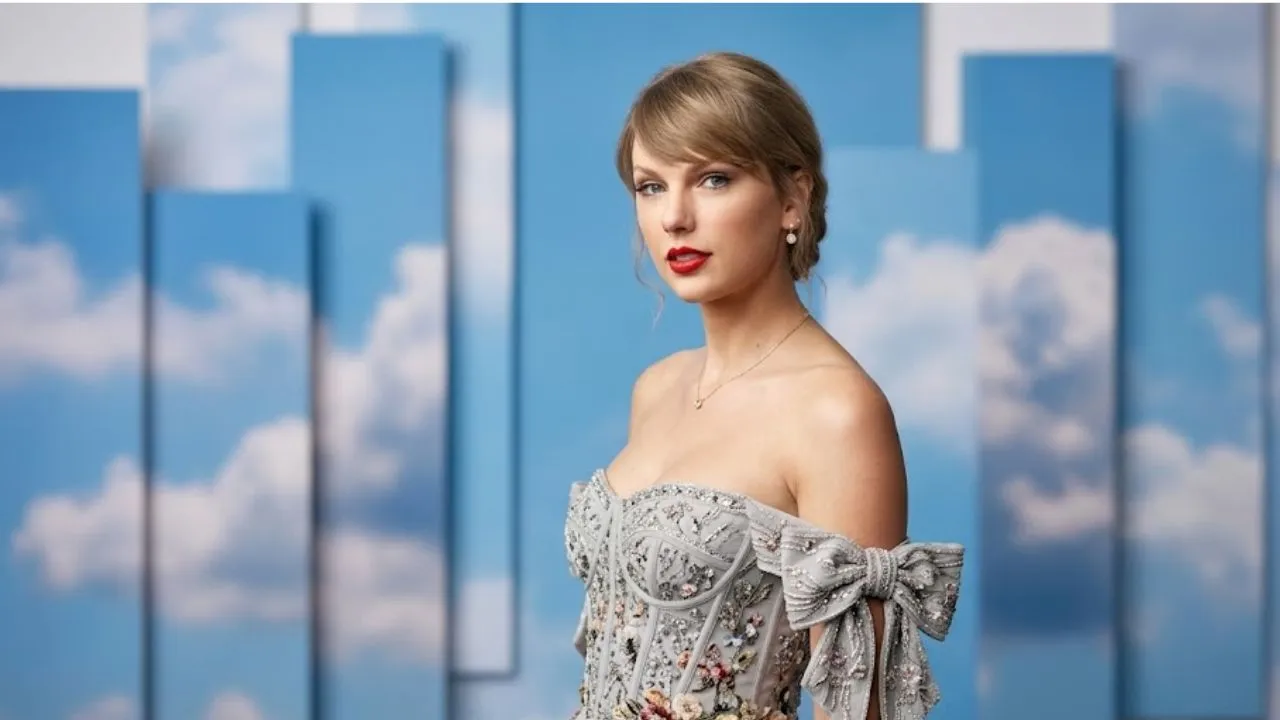
A smaller spinet allows her to see over the instrument, keeping sightlines open with both her band members and the crowd.
Drawing a quick parallel to Paul McCartney, who similarly favored spinet pianos for their lower profile, Swift explained that maintaining direct line-of-sight is vital for capturing real-time energy in a room.
The panel also addressed the discipline required to maintain a vast catalog. Swift demystified the creative process, noting that relying solely on spontaneous inspiration is unsustainable for long-term output.
She explained that showing up to write consistently matters more than waiting for external motivation, remarking that her creative muse often arrives only after the physical work has already begun.
Her focus on artistic discipline and narrative details often parallels the deep public interest in her broader career and personal choices.
Media coverage frequently tracks logistics around her public life, including interest surrounding taylor’s wedding details.
High-profile event planning and security arrangements occasionally lead to reporting on items like a taylor swift nyc permit, illustrating how technical details constantly surround her creative ventures.
The conversation underscored how deeply Swift values the initial spark of an idea, even when it demands rigorous refinement later on.
Rather than treating songwriting as a clinical, step-by-step task, she described the studio as an open sandbox where every collaborator’s input carries weight.
By pairing that open-ended curiosity with an unyielding work ethic, she has built a structural system capable of supporting intimate acoustic tracks and record-breaking stadium anthems alike.
Following the retrospective interview, Swift moved to the piano to perform an intimate medley featuring “August,” “All Too Well,” and her recent track “I Knew It, I Knew You”.
Attendees noted that Swift stayed after the presentation to converse individually with the music creators in attendance, capping off a deep dive into the discipline that continues to define her discography.
Read More: Grammy Winner Molly Tuttle Marries Old Crow Medicine Show’s Ketch Secor | Where to Get Taylor Swift’s Sold-Out $798 Dôen Dress for $36 | The Private Business Lesson Dolly Parton Taught Taylor Swift About Owning Her Music

1 thought on “Inside Taylor Swift’s Recording Academy Retrospective: Why She Refuses Creative ‘Lateral Moves’”